


A new report finds that 60% of popular children’s candies contain arsenic, raising concerns about food safety and whether candies contain arsenic at harmful levels.
Children’s Candies Contain Arsenic Levels
Florida recently tested 46 popular candies heavily marketed to children. The results were sobering: 28 of the 46 products contained elevated levels of arsenic, a known human carcinogen associated with increased risks of skin, bladder, lung, kidney, and liver cancer with repeated exposure over time. These were state-conducted analyses released by the Florida Department of Health under the Healthy Florida First initiative.
Among the candies identified were many household names that routinely appear in lunchboxes, movie theaters, holiday bags, and Valentine’s Day treats: SweeTarts, Nerds, Sour Patch Kids, Skittles, Twizzlers, Jolly Ranchers, Trolli, Tootsie Roll, Snickers, and Kit Kat. These products are not occasional treats; they are designed, packaged, and marketed for frequent consumption.
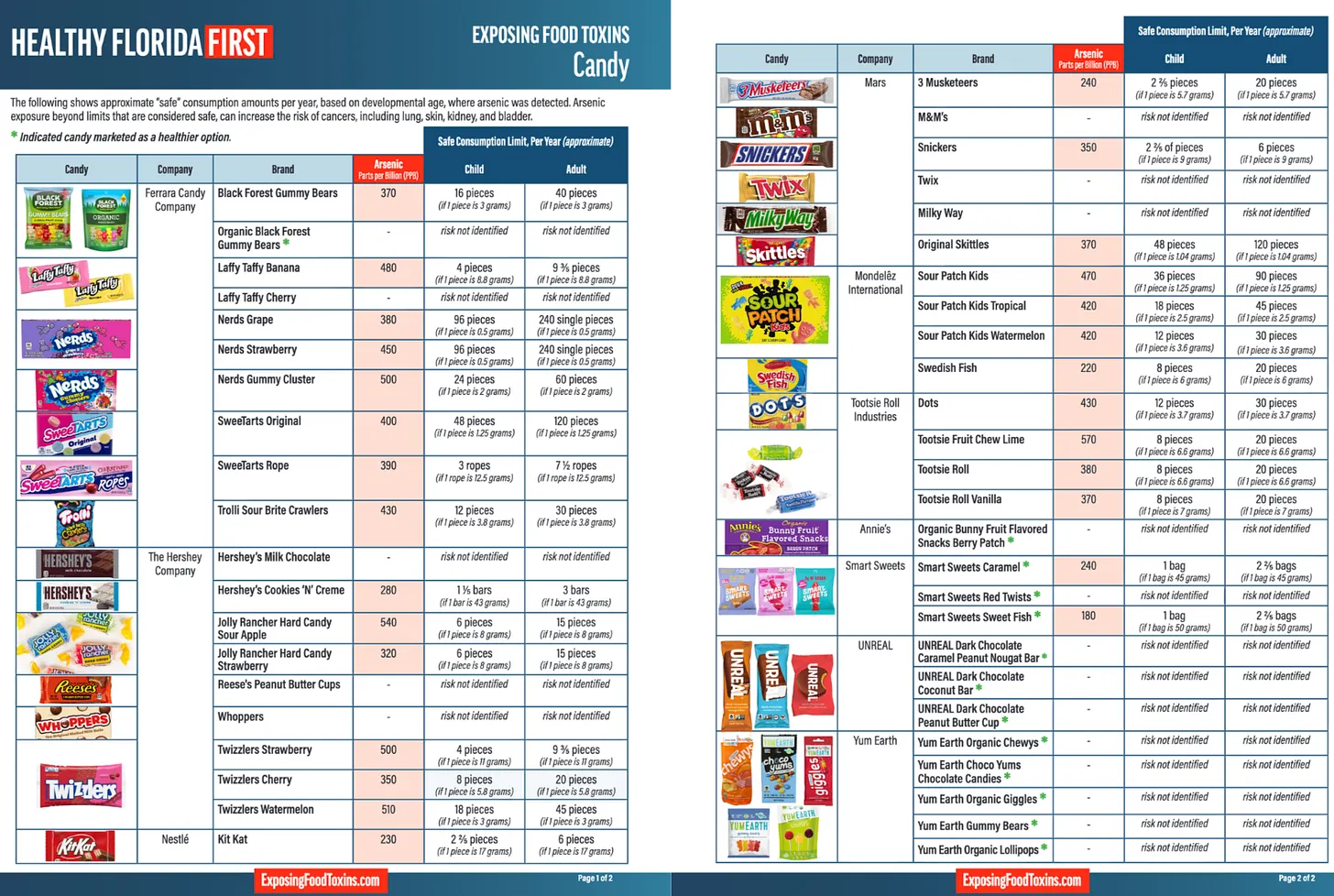
What makes the findings especially concerning is the “safe” consumption limits calculated specifically for children, based on the detected arsenic levels. According to Florida DOH, a child could safely consume no more than:
-
Nerds (Grape or Strawberry): 96 pieces per year
-
SweeTarts Original: 48 pieces per year
-
Sour Patch Kids: 36 pieces per year
-
Skittles: 48 pieces per year
-
Trolli Sour Brite Crawlers: 12 pieces per year
-
Jolly Ranchers (Sour Apple or Strawberry): 6 pieces per year
-
Twizzlers Strawberry: 4 pieces per year
-
Tootsie Roll: 8 pieces per year
-
Kit Kat: approximately 2½ pieces per year
-
Snickers: approximately 2% of a standard bar per year (child)
These limits are incompatible with normal consumption. A single box of Nerds can contain 2,000 to 8,000 pieces, making it impossible for children to remain within what the state itself considers safe. The issue is not an occasional treat, but repeated exposure over years, which is precisely how arsenic causes long-term harm.
The findings raise a deeply troubling possibility: for decades, children may have been routinely exposed to arsenic through candies widely assumed to be safe, without meaningful oversight or disclosure. This warrants immediate concern beyond Florida. Every state should replicate this testing without delay. In the meantime, parents should take these results seriously and avoid or strictly limit candies shown to contain elevated arsenic.
_________________________________________________________________________________________
Epidemiologist and Foundation Administrator, McCullough Foundation
Support our mission: mcculloughfnd.org
Please consider following both the McCullough Foundation and my personal account on X (formerly Twitter) for further content.


